October 11, 2026
Incentivized Traffic in Lead Gen: Real People, No Intent
What incentivized traffic is
Incentivized traffic, often shortened to incent traffic, is traffic that arrives because the visitor is offered a reward for taking an action. The reward might be cash, points, a gift card, a sweepstakes entry or a discount. The action might be installing an app, watching a video, completing a survey or filling in a lead form. Traffic that comes without a reward attached is called non-incent.
In lead generation, the pattern is easy to picture. A person on a rewards or sweepstakes site is offered something for completing an offer, and one of the offers is your lead form. They fill it in, they get the reward, and you receive a lead.
The important thing to understand is who that person is. They are usually real. Their name and email address are genuine. They simply did not come looking for what you sell. The reward drove the submission, not the interest.
Where it comes from
Reward-based sources include rewards and get-paid-to sites, cashback and loyalty programs, sweepstakes and giveaway pages, survey and offer walls, and co-registration flows, where signing up for one thing presents a list of other offers.
Affiliates use them because they are cheap and they convert well. People who are being paid to complete an offer tend to complete it. That is exactly why an unusually high conversion rate can be a warning sign, as the conversion rate guide explains. A rate that looks too good may simply reflect the reward.
Why this is a problem for advertisers
Reward-driven visitors tend to do the minimum needed to collect the reward. That is a reasonable thing for them to do, and it means the leads behave differently from people who wanted your product.
They may not answer the phone. They may not remember the offer, only the reward. They may have submitted forms for dozens of other advertisers the same day. If you pay a full lead price for them, you are paying for a form fill that was never going to turn into a customer.
There is a second problem when the incentive is hidden. Some programs forbid incentivized traffic, and some affiliates use it without saying so. An advertiser who thinks they are buying intent-driven leads, and is actually buying reward-driven ones, makes decisions on numbers that mean something different from what they assume.
Incentivized does not automatically mean fraud
It is worth being fair about this. An incentive is not the same as deception.
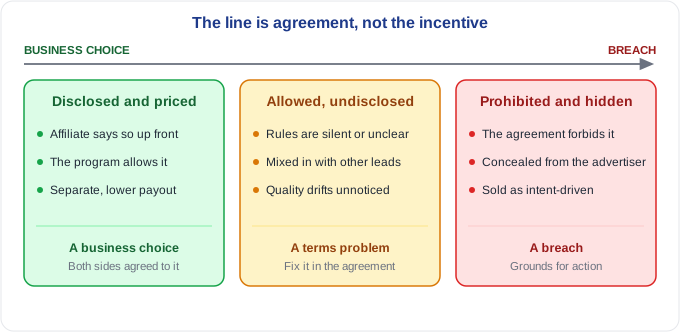
Some advertisers buy incentivized leads on purpose, at a lower payout, because the volume is useful and the lower price reflects the lower intent. That is a business choice, and it only works when the affiliate says what the traffic is and the advertiser agrees to take it.
The trouble starts when the rules are unclear, so the traffic is mixed in with everything else, or when the agreement forbids it and the affiliate hides it. The line is not whether an incentive exists. The line is whether both sides agreed to it and priced it honestly.
How it can look in an export
You cannot read intent from a single row, but reward-driven traffic often leaves tendencies in the data.
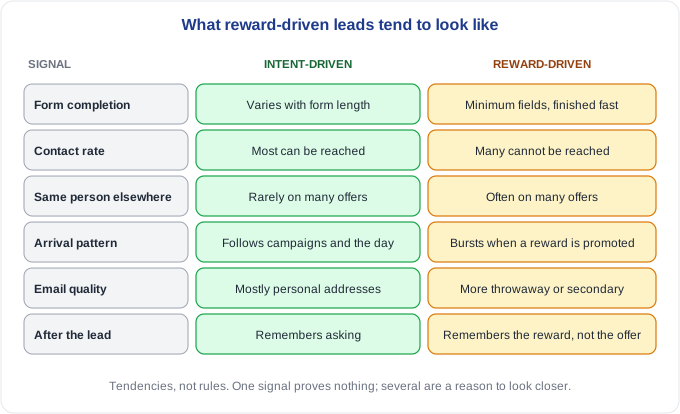
These are tendencies and not rules. Plenty of honest traffic fills in forms quickly, and plenty of reward-driven people use perfectly good addresses. One signal proves nothing, and several together are a reason to look closer.
Some of these signals live in your own export. Leads that complete the form unusually fast, arrive in bursts, or sit behind the same sub ID are all visible there, and the affiliate fraud detection guide covers how to check each level. The same person appearing across many offers is harder to see from one advertiser's data, but it shows up as duplicates when you compare your files over time.
Measure what happens after the lead
The most reliable evidence is not in the lead data at all. It is what happens next.
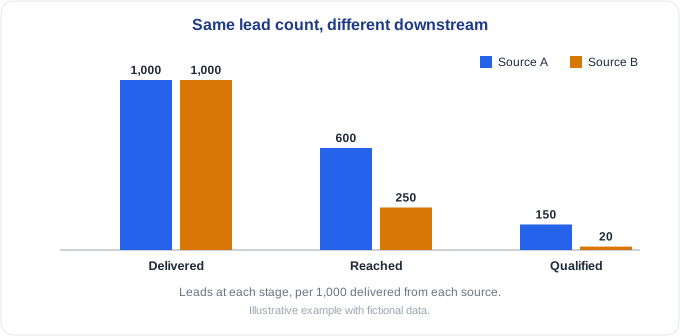
Two sources can deliver the same number of leads and produce very different results. In the example, Source B looks identical to Source A at the delivery stage and falls away at every stage after it. If you only count leads delivered, they look equal. If you follow them, they are not.
Track the share of leads reached, the share that remember asking, and the share that qualify, by source and by sub ID. A source that keeps delivering leads nobody can reach is telling you something, whether or not it ever tells you it is incentivized.
What to do about it
- Decide your policy and write it down. Allowed, allowed with disclosure, or not allowed. The agreement template guide has sample wording for naming incentivized traffic in the terms.
- Ask affiliates to declare it. Make disclosure a condition of approving a source, so you hear about it before it appears in your numbers.
- Separate it. Use sub IDs so incentivized traffic can be reported, capped and paid on its own, away from intent-driven leads.
- Price it honestly. If you accept it, a lower payout reflects lower intent.
- Test small. Start with a cap and look at the downstream outcomes before you scale.
- Give reasons if you reject. A rejection tied to a stated rule and the evidence is far easier to settle. The article on lead scrubbing covers keeping scrubs fair.
If you are the affiliate
Say what your traffic is. Advertisers are far more willing to work with an affiliate who is honest about incentivized sources than with one whose leads turn out to be reward-driven after the fact. Read the program's rules before you send any, and ask when they are unclear. A lower-paying approved source is better than a higher-paying hidden one that gets you removed.
Checking your own leads
If you suspect some of your traffic is reward-driven, a recent export is the quickest place to start. Send us a recent lead export and we will run every lead through our checks and email you a report showing which ones look suspicious and why, at no cost. A flag means a lead deserves a closer look, and the decision stays with you.
Frequently asked questions
What is incentivized traffic? It is traffic that arrives because visitors are offered a reward, such as cash, points or a gift card, for taking an action. In lead gen, the action is usually filling in a form.
What is non-incentivized traffic? Traffic that comes without a reward attached. People arrive because they are interested in the offer, which usually means higher intent.
Is incentivized traffic fraud? Not by itself. It becomes a problem when the agreement forbids it and it is hidden, or when it is sold as intent-driven traffic. When it is disclosed, allowed and priced accordingly, it is a business choice.
Can incentivized leads convert? Some may, but they tend to do only the minimum needed to get the reward, so conversion is generally lower than for intent-driven leads. Follow the outcomes by source to find out for your own program.
How can I tell whether leads are incentivized? Look for fast form completion, bursts, concentration in particular sub IDs, throwaway emails and low contact rates, then confirm with outcomes and by asking the affiliate. No single signal is proof.
A lead is only worth the full price if the person wanted what you sell.